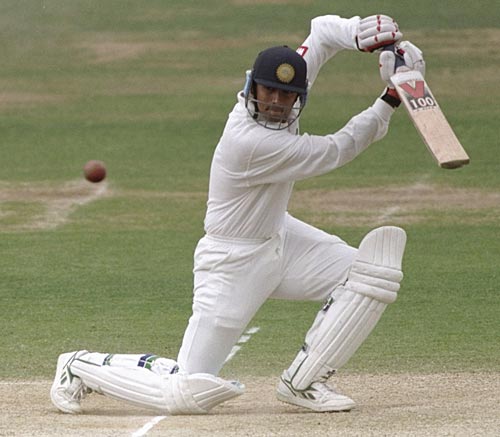
Showing posts with label MS Dhoni. Show all posts

Wednesday, February 29, 2012

PLANNING OF A CHASE - 2

What a chase we had today! India, needing a bonus point win, chased down Sri Lanka's score of 320 in just 36.4 overs, to win by 7 wickets with 80 balls to spare. This win has kept India alive in this tri-series for at least 3 more days, and increased the interest in the last round robin match between Australia and Sri Lanka.

India knew right from the beginning that the target, whatever it may be, had to be chased down in 40 overs or less. So when the first half ended and the target of 321 became clear, the hopes of an average Indian fan were not too high. But the Indian batting unit, which has not enjoyed a fruitful tour of Australia, clicked well and - riding on a magnificent ton by Virat Kohli - chased down the target in a more than convincing style!

The chase was a brilliantly constructed one. Since the required rate for a 40-over win was above 8 runs per over, it was clear that a fast start would be of utmost importance. Sehwag and Tendulkar provided that with some audacious batting. When the mandatory powerplay ended, India had scored 97 runs for the loss of the two openers.

When Tendulkar got out lbw to Malinga in the 10th over, there were a lot of tweets on my timeline suggesting that Dhoni should come out to bat. Their logic must have been that he takes his time to settle in, and if there is time to be used up, it better be between 10 - 15 overs rather than later in the innings. That is fine, but I was happier to see Kohli come in to bat at No. 4, and happier still that he stayed till the end to guide the chase in a manner contrasting of how Dhoni would have done it.

My last post on this blog (about 2.5 weeks ago) was about Dhoni's planning of chases. This one is about how Virat Kohli planned this one, and comparing it with what Dhoni would have done (the latter part would obviously be presumption based on the pattern of his innings in the successful run chase against Australia and the tied match against Sri Lanka).

On of my biggest problem with Dhoni when he comes out to bat with overs in hand in a run chase is that he plays far too many dot balls at the start of his innings. Settling in is fine, but the same can be done more effectively by rotating the strike rather than dead batting the ball. Kohli too played 8 dot balls between 10 and 15 overs, but at the end of 15 overs, he was still batting on 16* (18b). Compare this with Dhoni's knock in the successful run chase against Australia, and you will find that Dhoni stood at 8* (24b) at one stage in that chase. Even if you grant Dhoni the benefit of a much easier chase on hand against Australia, I don't think you'd still justify 8 runs in 24 balls!

At the end of 15 overs, India stood at 118 for 2, and though only 21 had been scored in the last 5 overs, there was enough momentum to make Mahela Jayawardene delay taking the Bowling Powerplay, as he has himself admitted. Had Kohli made the kind of start that Dhoni made at Adelaide, India might have had about 10 runs fewer at that stage, and Sri Lanka might have taken the Bowling Powerplay, causing the batsmen to take a risk or two more than ideal. This is presumption, but by no means far-fetched!

In my last post, I had written: "if the best finisher of the team (MS Dhoni) is coming in to bat with 92 needed of 95 balls and batsmen like Suresh Raina (batting), Jadeja and Ashwin (to follow), and the team ends up needing 13 in the final over with two of these above batsmen still batting, then the chase has been miscalculated somewhere."

At Hobart, two of India's best chasers (Gambhir and Kohli) planned it in such a way that going up to the 40th over would not be necessary. One may argue that the early finish was more a result of the leaking Malinga - an assault that even Kohli would admit that he had not planned for - but I think it is still quite clear that Kohli had planned to finish the game off at least one over before the 40th. Their partnership saw calculated risks (mostly taken by Kohli) for boundaries every now and again, which allowed them to be unflustered if Sri Lanka managed to sneek in a good tight over. This is the reason why Rangana Herath's spell of 4 overs for just 20 runs did not have as big an effect on the result as it should have had.

When the second lot of powerplay overs commenced, Kohli executed the second half of his plan, which was to attack straightaway and keep the required run rate below 9 runs per over at all times, rather than chasing 13 off the final over! He was obviously helped by some poor bowling from Sri Lanka, especially some of the leg-stump lines... but one must consider that when a batsman is pulling off some calculated risks, the bowlers are under increased pressure and have greater tendency to falter.

India may still not reach the finals of the series, but it was a great match for the team... and something they dearly needed towards the end of a very difficult tour of Australia!

Monday, February 13, 2012

PLANNING OF A CHASE

India beat Australia earlier today by 4 wickets with 2 balls to spare at Adelaide in the 4th ODI of the CB Triangular Series. While Gautam Gambhir was India's top contributor with a measured 92, it was Dhoni's knock of 44* (58) that was the talking point of the day.

India won the match due to a massive 112 meter six by Dhoni followed by a no-ball by Clint McKay due to a above-waist height full toss. Once it was over, a lot of people called it all well and good... but was it just as well and good when the chase was on? My Twitter timeline at the time of the chase said that most of the viewers were having trouble understanding why Dhoni was leaving it so late. And I was with them... indeed, why so late?

The biggest question raised after Dhoni hit that monstrous six was that if one can hit such shots, why not try it earlier to ease a bit of pressure, rather than risking it all at the end. And these kind of queries were not just raised in the minds of casual viewers, but also the men in the dressing room. The Man of the Match Gautam Gambhir had this to say: "We should have finished this game in the 48th over. We shouldn't have taken this game to the 50th over, that's my personal observation."

What is the best way to plan and pace a chase? When do you attack and when do you rely on quick running? Obviously, the answers differ in different conditions, but I think certain things remain common everywhere. In my opinion, if the best finisher of the team (MS Dhoni) is coming in to bat with 92 needed of 95 balls and batsmen like Suresh Raina (batting), Jadeja and Ashwin (to follow), and the team ends up needing 13 in the final over with two of these above batsmen still batting, then the chase has been miscalculated somewhere.

And in this innings of MS Dhoni, it is quite apparent where the miscalculation occurred. His innings break up is like this - 8 runs of first 24 balls, 25 of next 31 balls, and 11 runs of the last 3 balls. He came in when 92 were needed of 95 balls, and ended up playing 30 dot balls, i.e. 52% of the total deliveries he faced. To put it in perspective, Gambhir faced 52 dot balls in his 111-ball innings, i.e. 47% of the total deliveries faced by him, despite batting through the middle overs as well!

One might well argue that since Dhoni was not doing much to get the required run rate down, Raina and Jadeja had to go for the big hits, and lose their wickets in the process. Gambhir was right when he said that it's difficult in the middle, and different people plan their chases differently, but surely, when you end up with 7 runs of 19 balls in the Batting Powerplay and play a dot ball in almost every over where you also take a 2, you are not doing a lot of good, are you?

Dhoni is usually a fabulous planner and executor of chases - stiff ones, tricky ones, easy ones and straightforward ones. He, along with Gautam Gambhir and Virat Kohli, have made India a very competent chasing unit in limited overs cricket, and also made the World Cup runners-up captain Kumar Sangakkara remark that a team needs about 350 runs on the board to feel safe against this Indian team. But every now and again, there arises a question mark of Dhoni's strategies in such situations.

Like it arose today, it had also arisen during the first Twenty20 between India and Australia earlier on this tour. One of the earlier occasions that I can remember when a similar question had arisen in my mind was not a chase, but India setting a target for New Zealand on the tour of 2009 in the 2nd Twenty20 International, where he wasted the middle overs with 8* (18) before ending up with 28* (30). In that match too, it might be argued that Dhoni's slow approach forced Yuvraj Singh, Yusuf Pathan and Ravindra Jadeja to play shots that shouldn't have ideally been required in those situations.

The man I have written this post about - MS Dhoni - had brilliantly executed the 161 required runs of 170 balls in the World Cup finals. The run rate required then at Wankhede Stadium was 5.68 runs per over, and here at Adelaide Oval was 5.81 runs per over. If he can do it so well there, why couldn't he do it as well here? Had this been a one-off case, I wouldn't have bothered writing this long a post, presuming it to be a mistake. But it is not a one-off case, and thus this has to be considered a strategy of some sort - and in my opinion, a miscalculated strategy!

Tuesday, January 17, 2012

COMPARING THE TWO HORROR TOURS

Taking a leaf out of Stuart Broad's book!
This one's headed the same way as the last one... and it is unbelievably painful to watch it happen. Mad hope kept flickering up every now and again, but there was always an air of inevitability even when there was some promise being shown.

Which tour is more depressing as a cricket viewer? I really have no idea, and even if I discover some way of measuring my depression, I would really not be interested in doing so. But since we are in the midst of the Australian tour, I want to touch upon certain points that make me really afraid of what's happening and what more might happen.

During the tour of England, a lot of things went wrong for India. It was believed that if some of those things had gone right, India would not have suffered the embarrassment of a whitewash. In the period between the England tour and the Australian tour, there were a few steps taken that were seemingly lessons from the former. Yet, here we are... facing the very same 4-0 scoreline against an opponent that is definitely not as good as England had been!

So what were the excuses that could have been passed off as reasons for the England debacle?

ZAHEER KHAN LIMPING OUT

India received the biggest blow possible on the very first day of the Test series in England, when Zaheer Khan limped back into the dressing room clutching his hamstring muscles after having picked up the wickets of both the English openers (and having a catch dropped of their No. 3 in the slips) by soundly working them over. The absence of Zaheer Khan for the rest of the tour was considered to be one of the biggest factors of India's losses there by all and sundry.

But now, in hindsight, one wonders how much of a difference would he really have made! He has been available for all the 3 Test matches in Australia, and while he has bowled well himself, India's attack really has not looked as threatening as it should have considering the personnel present. One might say that the Zaheer-led bowling attack has done commendably except for that one period spanning over two Tests in different time zones where they conceded 836 runs for just 1 wicket, but that is a hollow argument!

The only conclusion that can be drawn after watching India bowl in the 7 losses thus far is that with or without Zaheer Khan, the bowling has just not been good enough to get the team within sights of a victory! While their opponents have had bowlers (Stuart Broad and Peter Siddle being prime examples) who have altered their bowling lengths to gain impressive rewards, the Indian team continue to field a bowler (read Ishant Sharma) whose lengths have received sound punishment and have shown no signs of changing.

INJURIES IN BATTING

In England, India was hampered by lack of fit personnel even at the top of the batting lineup. Sehwag was unfit for the first two Tests, and did not look fit enough even in his return for the last two Tests. Gambhir suffered injuries during the series. Tendulkar had to play an innings battling fever. Yuvraj Singh got injured during the series.

In Australia, there have been no such problems. Sehwag came in completely fit having scored the highest score by a batsman in ODIs, and Gambhir too came in fully fit and having recovered a bit of his lost touch against the West Indies at home. And even before the series started, there was more or less a certainty that Virat Kohli would be given a decent run at the No. 6 spot. So as a result, India played an unchanged top-7 in all three Tests... and floundered in each one of them!

The consistent failures of the Indian batting unit have been very baffling and difficult to explain. These men have brilliant records and have been proven performers in the past even in tough away conditions too. With these 7 losses, voices have grown loud that these batting stalwarts are old now, and their age is showing up in their batting. Dravid's spree of bowled dismissals are explained as a result of slowing reflexes.

These very same men had had wonderful runs with the bat in not too distant a past, and back then, they were being described as fine wine - getting better with age. Now, they are supposedly getting slower with age. It's the easiest way of calling for their heads, I suppose!

While it is obvious that sooner rather than later, these men will have to make way for a younger generation of batsmen, one needs to realise that age has hardly been a factor in their undoing. Yes, they have failed... failed in 7 consecutive away Tests! But I honestly believe that this failure has been more due to much braver (read fuller) bowling from the opposition bowlers in helpful conditions. Since the Indian bowlers have not been able to replicate such consistency in bowling, the opposition batsmen have been made to look much better than their Indian counterparts, which may not be the genuine case!

LACK OF PREPARATION

In England, lack of acclimatisation and preparation in those conditions was considered to be a major factor in the losses. The Indian team landed in England after the Caribbean tour less than 10 complete days before the start of the first Test. They played just one 3-day warm-up game before the first Test, and looked ill at ease in conditions that were completely different from the ones they are accustomed to.

For the Australian tour, certain players reached Down Under more than two weeks before the first Test, and the others reached about 12 days prior. The preparation involved one 3-day game and one 2-day game. No player was coming in unfit or with the lack of match practice. In fact, India's biggest concern was over the fitness of Zaheer Khan... but he too played two Ranji games before playing a warm-up match in Australia.

After the first Test at MCG, Dhoni said that India have always been poor starters. It was depressing to see him hide behind that age-old facade... while the truth remains that the first Test was the one where the team was the most competitive during this tour, and had genuine chances of a win! Since then, it has all been downhill.

SCHEDULING

The IPL got a lot of flak after the England disaster, because of the way it disrupted cricket schedules. While the rest before the Australian tour for the team was hardly any better, but they were at home in an ODI series. This meant that the core of India's middle order was well rested and those who were participating in the ODI series were doing so to gain match fitness, practice or cement their spots in the Test team.

The scheduling also received a lot of flak because of the inadequate acclimatisation factor, as touched upon in the previous point. Yet no such reasons can be passed off here in Australia. The only conclusion that I can draw is that the team has actually been outplayed on the field, and any changes in the external factors would hardly have made any difference to the eventual result!


In England, the Indian team was beaten by a deserving side functioning at the top of its game. All the reasons / excuses that were put up by the fans defending the team were nothing but a protective shield to prevent any adverse after-effect of that shocking loss! Therefore, it was doubly depressing to see that protective shield blown apart piece-by-piece in a systematic fashion to leave the team and the fans nakedly exposed and vulnerable.

Every now and again, time calls for change. For the Indian team, there had been confusion over the past couple of years about when exactly is that time. Well, there is no such confusion now! That time for change has come, and a lot of rebuilding needs to be done. There will be more losses on the way, and more pain to be endured. But what needs to be done must be done!

Wednesday, January 11, 2012

A NOT-SO-DRASTIC SUGGESTION FOR TEAM INDIA

As expected, a couple of losses have brought out the knives against Team India. The blame has been placed on batting, bowling, captaincy, lack of practice, disharmony in the team, and myriad other factors. Suggestions and advice have been pouring in from everywhere.

These suggestions involve simple things like dropping VVS Laxman for Rohit Sharma, to more radical ideas like R Ashwin opening the batting!

Since virtually everyone has jumped in on the bandwagon, I thought of joining in too. But my solution (or should I call it suggestion) to the Indian team is far less drastic.

I would like to see the Indian team go unchanged to Perth, with a small reshuffle in the batting order - Kohli at 5 and Laxman at 6. There are a number of reasons behind this line of thinking, and I'll state them thus:

A. Fours Bowlers vs. Five Bowlers

I don't see any reason to change the status quo unless we discover a new bowling all-rounder in the ranks. And while Ashwin's performances with the bat do show promise, it is far too early to call him an all-rounder already. The drubbing at SCG has made everyone cry hoarse about India's bowling resources, and it's been conveniently forgotten that at MCG, Sehwag had called this very same bowling unit the best that he had ever played with.

While I don't think it's the best ever of Sehwag's time, but I still do think that it is quite good. They took 20 Australian wickets at MCG, and if the WACA pitch offers assistance as is being claimed in the media, I think they are quite capable to picking 20 more there. They are well-rested now after having been in the field watching Australia score a mammoth score, and most importantly, there are no injury concerns (at the moment).

Zaheer Khan has been leading the attack well. Umesh Yadav has been inconsistent and a little wayward, but I think he can be relied upon to pitch the ball up. In the second innings at MCG, his lines were not that good, but he grabbed 4 wickets because of his length. Ishant Sharma is, in my opinion, the biggest concern because he finds it difficult to change his length, and at a venue like Perth, his natural short-of-a-length balls will seem a lot shorter than they do at other venues.

There are talks of dropping Ashwin and going for Ojha or a fourth seamer... but I don't think that is a very good idea. Maybe, Ojha for Ashwin is an option worth considering, but definitely not a fourth seamer! I don't think either Abhimanyu Mithun or Vinay Kumar will add a lot more value than R Ashwin in the team. As for Ojha, the main reason for considering him is that the Australian right-handers pose more of a threat than the left-handers. Zaheer Khan with the new ball is very potent against the left-handed top-3 of Australia. But with Michael Clarke hitting form and Ricky Ponting hitting a ton, a left-arm spinner might be of help more than an off-spinner.

B. Laxman At 6

Laxman's numbers at No. 5 are very similar to his numbers at No. 6. Averages of 49.00 at 5 and 50.18 at 6 show that he is quite comfortable at both these positions. However, from the team's perspective, I think it is beneficial to have him at 6 rather than 5.

There are a number of benefits of having him bat at 6. Firstly, it adds experience in the lower middle order of India's batting, which has been prone to collapsing even after being given a good platform by the top- and middle-order (read 1st innings at MCG). Secondly, it separates India's Big 3 - Rahul Dravid, Sachin Tendulkar and VVS Laxman. When they are bunched together at 3, 4 and 5, one bowler bowling a fiery spell with good rhythm can get rid of all of them. With Laxman at 6, it offers a break between India's 3 best batsmen's batting positions and protects them from one inspired spell of fast bowling.

C. Kohli At 5

Virat Kohli is young - in terms of both age and experience in Test cricket! Currently, when he comes out to bat, he comes with the knowledge that there is just a struggling MS Dhoni and the tail to follow him. With him at 5, he will know that there is an experienced batsman in the form of VVS Laxman to follow, and will allow him to play in slightly lesser pressure. At No. 5, he will almost invariably bat with one of the Big-3, and if he survives that partnership, he will get a chance to bat with another member of the Big-3. These experiences can only help to calm him and grow as a cricketer.

D. Kohli vs. Sharma

All those people calling for Rohit Sharma to replace Virat Kohli need to realise that Rohit Sharma is not a saviour sent from heaven for Indian team's cause. In shorter versions of cricket, Sharma has flattered to deceive in the past, and that is why Kohli got his chances in the first place. Since Kohli capitalised, it is fair that he be given his chances in Test cricket too... even if they are chances to fail!

The most baffling point is that I don't see any reason why Rohit Sharma can come into this lineup and do something that other batsmen cannot do! Sanjay Manjrekar says that this step makes "long term sense"... but right now, the team's goal is a very short-term one - i.e. to arrest this slide in Australia and put India's away Test cricket on surer footing. The time for long-term measures will start after this tour, when India will play at home for a long time. For the present short-term goal, lets stick to short-term solutions and show faith in these players!

Saturday, January 7, 2012

MS DHONI'S JEKYLL AND HYDE SYNDROME

MS Dhoni has received a lot of flak over his field placements and defensive captaincy strategies over the past week at SCG. This is not the first time that his field settings have left cricket watchers frustrated in muted agony. Some just shrug their shoulders and say that it's become a part of the modern-day captaincy, while others grit their teeth and wonder who-the-hell ever called Dhoni an attacking captain!

I find Dhoni strange and difficult to understand. Sometimes, his field placements and other strategies are so good that you feel the need to applaud him even if they do not work out the way they were intended... and at other times, they are so lousy that you question whether you are watching the right match!

Less than 10 months ago, on 24th March 2011, India played the Quarterfinals of the ICC World Cup 2011 against the then three-time defending champions Australia at Ahmedabad's Sardar Patel Stadium. In that match, Dhoni had attacked like I have never seen him do before. He had a fielder at silly point even on Yuvraj Singh's bowling in the 39th over of the Australian innings to Ricky Ponting, who was batting fluently in his 60s and 70s. In fact, Ponting had either a short square leg or a silly point virtually every time he faced a spinner till he was in his 70s.

Those attacking field placements may not have directly earned India any wickets, but they surely sent a statement of intent to the opposition. One might argue that Michael Clarke's horrendous attempt at slog sweeping Yuvraj Singh might have been caused by the attacking field settings (even he had a slip for him in the 31st over bowled by Yuvraj Singh), but that is arguable both ways.

Even in the Semi-finals against Pakistan at Mohali, I was impressed by the fielding positions he had set. The fielders were within the 30-yard circle were up very close, in order to stop the singles that result if they are fielding on the edge of the circle. On the other hand, the fielders in the deep were right on the boundary line, in order to cover as much ground as possible to prevent a boundary. For the gaps in the middle, he relied on the lack of athleticism of Asian batsmen for converting ones-into-twos. That was quite brilliant to watch as the pressure built on Pakistan, with Younis Khan and Misbah-ul-Haq almost stalling their progress in the middle overs.

Post the World Cup win, when I had done a post on the main architects of India's World Cup triumph, I focused more on Dhoni's captaincy in the knock-out matches than his knock in the World Cup final. Those kind of knocks when India is chasing a target in ODI cricket are a Dhoni-specialty, but that brand of attacking captaincy as we witnessed in India's last three World Cup matches was a pleasant change.

And now with the benefit of hindsight, I can say that it indeed was just a "pleasant change". I had secretly hoped that Dhoni might have turned over a new leaf during the World Cup, and we would see a more attacking Indian captain post that win. The first crack in that hope came with the draw at Dominica. The England tour also a big question mark, but to be fair to Dhoni, he never really had a bowling unit there with whom he could attack well.

But here in Australia, that reasoning does not hold good. Sehwag claimed at Melbourne that the current pace-bowling unit is the best he has ever played with. Even if that assertion is over-the-top, there is no denying that this indeed is a very good bowling unit that India is carrying (obviously when fully fit). They may have flopped miserably at SCG with only 4 wickets to their name (reminds me of the Centurion Test on India's 2010-11 tour of South Africa), but they are the very same bowlers who grabbed 20 Australian wickets at MCG.

It can be arguably held that a bit less defensiveness of Dhoni's part might have helped the bowlers in a big way. It wouldn't have allowed the Australian tail to wag as much as it did at MCG, which could (and I am just saying COULD) have altered the result there... and while at SCG, the result may not have changed, but there was definitely a scope for a little more attacking cricket when Ponting and Clarke were early in their partnership. Even when their association had crossed a 100-run mark, Australia was still trailing India (albeit not by much). I would have expected a truly-attacking captain to use that slender margin of lead to continue attacking rather than having a sweeper cover and a deep square leg. It just so happens that because of the size of the SCG, Dhoni continued to be unable to stop the flow of Australian boundaries and runs.

I wonder which 'alter' of Dhoni's multiple-personality will need to be strengthened to see him attack once again like he did at the World Cup!

Monday, December 26, 2011

A PECULIAR BOXING DAY

It started promisingly with the Australian captain courageously deciding to bat first. It must have been tempting to send India in, given that the Indian batsmen are known to be slow-starters on away tours... and slower still in difficult conditions. And the first hour was difficult... even though the Indian bowlers could not take maximum advantage of it!

But after the toss, the day was a bit of an anti-climax. There had been so much talk about the contest between hosts' bowling v/s. the visitors' batting (as is the norm before almost every Indian tour outside the sub-continent) that watching the contest other way round felt a bit drab.

The recovered-ankle duo opened India's attack... and might I say, gingerly! At Lord's earlier this year, Zaheer Khan had used two bouncers in his short and interrupted bowling spell. The first one had been under-edged by Strauss, and the second one was top-edged and caught at deep fine leg. Here at MCG, the first attempt at a bouncer came by the first-change bowler Umesh Yadav. And it was answered emphatically by David Warner.

So it was nice to see Yadav bang one in short straightaway after that small rain break... and he got his reward! Shaun Marsh fell soon, and Ponting got a knock to his head and fell down thrice at the crease before finding some sort of a rhythm in his batting. And all this while, almost invisibly, Ed Cowan ensured that he had gotten his eye in on his Test debut.

Then came the change in momentum. Australia consolidated with Cowan and Ponting, before someone whispered to Ishant Sharma that they were playing in Australia. He sent down an impressive spell before Yadav got Ponting caught at slip. Another brief fightback by Australia ensued before Zaheer Khan came in for a spell with the old ball.

It was Dhoni's most important throw of dice. As Cowan admitted in the press conference later, they were looking forward to blunt that Zaheer Khan spell and be right on top at the end of the day. But as Zaheer had done for India through the World Cup, he made the old ball count. A mini-collapse (which shall be debated for other reasons too) later, Australia found their Nos. 7 and 8 at the crease. Surprisingly, both Haddin and Siddle played out the day obstinately... making it a case of honours even at the end of Day 1.

A few thoughts on certain performances that made the cricket on this Boxing Day at MCG peculiar for me...

Ed Cowan looked compact and impressive. However, I did think that his judgment of the off-stump was not the best during the first session. Off his may leaves, there were a few in the opening hour that were far too close for comfort! So either he knew exactly where his off-stump was, in which case he must have nerves of steel... or the more likely tale would be that he was indeed jittery, but managed to get through that period and capitalise with a fine 68.

Ricky Ponting, without a doubt, started in jitters. Hit on the helmet early on, three of his first few leg-side shots made him lose balance and stumble at the crease, but he also got the runs at the same time. It was uncomfortable watching him bat that way, but it made for compelling viewing from my living room!

Umesh Yadav had India's best bowling figures today... but by no means was he the best Indian bowler on show! I thought he had been picked for his pacy stump-length bowling... but today, his lengths moved all around. His wickets came from a short ball, a full ball and a short-of-a-length ball. A couple more tomorrow from a length ball and from a yorker length ball would complete the entire set for him!

Zaheer Khan lasted the entire day. And he looked fit enough to last at least a few more! Every time he stretched his hamstring, I moved a little towards the edge of my seat... as if he was a time bomb ready to explode in a thriller! When he fell after having stopped a straight drive off his bowling with his left boot, I gulped and heaved a small sigh of relief when he got up with no apparent damage. But his old-ball spell was brilliant to watch. Working Clarke over, sending a snorter to Hussey, and then making Cowan fall on his back - all in the same over with an old ball. That was brilliant to watch!

While the cricket today was good in parts, there was nothing extraordinary! Maybe, it is quite unfair to expect something extraordinary on the very first day of the series, especially given that the hosts are batting and visitors bowling... but one drab day such as this surely increases the anticipation for the next day, for as Ravi Shastri would say "I just get the feeling that something's got to give here!"

Saturday, August 20, 2011

THE DRAVID SELECTION DEBATE

After what's been a nightmare of a Test series for an Indian cricket fan, the only silver lining is that it can continue for just 3 more days. I hope the change from white to blue will change the fortunes as well!

Talking of white to blue, I was just thinking about the Indian ODI squad for the 5-match series later. And obviously, the biggest surprise in that list was a certain Rahul Dravid.

Dravid has been one of the face-savers of India's batting in this Test series. With 2 hundreds against his name, he does seem to have gotten his touch back after a not-so-good run over the past 2 years. It was nice to see him bat the way he did, and the best aspect of his batting on this tour for me was that he did not get bogged down even when India was in a backs-to-the-wall situation (which was often). He still played his shots when the bad balls came (which was rare)! Over the last 2 years, I think he used to get bogged down quite easily but it didn't affect India much because the men around him were having golden runs.

Coming back to the ODI squad, as good a form as Dravid may be in, it was a surprise still to see him named in the ODI squad. I know that the Test team has been hammered by the English bowlers and English conditions. Yet, I somehow feel that asking Dravid to strengthen the ODI squad's Middle Order is a bit of a regressive step.

The last ODI that India played under MS Dhoni, it defeated Sri Lanka by 6 wickets in a match that was the finals of a World Cup! If you do not retain faith in a World Cup winning squad, it is quite a disappointment.

For the sake of argument, people would say that India was the No. 1 Test team too going into this Test series. Yet is floundered in a big way! But the point is, are we going to use this Test series then as a judgement scale for all our future selections in all formats of the game? Yes, it was a nightmare of a series, as I have already stated. But the ODI squad is different - even if it has to fail, it should be allowed its own chance to fail! The fact that the selectors have decided beforehand that the ODI squad is likely to fail and thus it requires services of Rahul Dravid, even without giving it a chance to fail, has disappointed me immensely.

The selectors have often been criticised for making Test selections on the basis of ODI performances, and Suresh Raina is still used as a case in point. Now they are making an ODI selection on the basis of Test cricket. How is the latter justified if the former is considered wrong?

I remember the time when the Vengsarkar-led selection panel decided to field a very young and inexperienced ODI squad against Australia in Australia. Back then, Australia were the reigning World Champions and also the World No. 1 team in ODIs (as they still are). Yet, we were bold enough to test our younger lot in the harshest way possible.

A certain Gautam Gambhir was the highest run-scorer for India in that tri-series. That same Gautam Gambhir went on to have a brilliant run in Test cricket over the next 2 years, and a little over 3 years after that tri-series, that same Gautam Gambhir fell 3 runs short of a World Cup final winning century while chasing a stiff target!

As a fan of the Fab Four batting lineup, I do feel happy to see Dravid back in the ODI squad. But as an Indian cricket fan, I do not think it is a move in the right direction. Rahul Dravid was persisted with despite a prolonged slump in his batting performances for over 2 years. I think the selectors should have shown similar faith in India's ODI batting unit!

Sunday, July 17, 2011

INDIA'S GREATEST ODI TRIUMPH OUTSIDE OF THE WORLD CUPS

This is an interesting thought that came to my mind when I was reading the Times of India article about the Raina / Yuvraj / No. 6 slot debate. There was this line in that article which said - "Lord's was the venue of India's greatest triumph outside World Cup when it chased down a target of 326 set by England in the 2002 Natwest Trophy and in which Yuvraj had played a critical knock of 69 runs."

While Lord's 2002 was undoubtedly a great win - one of the most memorable ever - but was it India's best ODI triumph outside of the World Cup? Immediately, two other triumphs come to my mind - the 1985 Benson and Hedges World Championship Finals against Pakistan at MCG, and the more recent 2008 Commonwealth Bank Series win over Australia.

If ever a vote is taken on this debate, I am sure that these 3 wins will pile up the maximum hits. Each one has something special about it...

Which was the greatest of them all?
1985 - I was not born back then, so wouldn't really be able to put describe much about the feelings and emotions of that occasion. But one look at the facts - a win over Pakistan in the finals, an unbeaten run in the tournament, a chance to show that the World Cup win in 1983 was not a flash in the pan, and the surroundings of the MCG - that win has to be special! A fine moment for Sunil Gavaskar as the captain, top-3 run-scorers were Indians, top-3 wicket takers were Indians, Ravi Shastri had a dream tournament and won an Audi for his efforts. The flowing champagne and the Audi ride after the win are some of the lasting images from that win. One reading of this Ravi Shastri interview leaves you in no doubt about the importance of that World Championship of Cricket triumph! In many ways, that win did just as much as the World Cup triumph of 1983 to redefine the status of cricket in India, and in effect, the status of India in the world of cricket!

2002 - A shirtless Sourav Ganguly on the Lord's balcony in a show of brilliant passion is the lasting image from this triumph. Two youngsters on the scene - Mohammed Kaif and Yuvraj Singh - scripted an unbelievable win when all hope seemed lost. Kaif came in to join Yuvraj at the fall of the big wicket of Sachin Tendulkar and India at 146-5. In a previous era, the fall of Sachin would have been game over for India... but these two young men changed that era right there. That match had passion all right - English captain Nasser Hussain's gestures to the media box on reaching his hundred, Sourav Ganguly's aggression at the start of the Indian innings, his disappointment when he got out, and then the final shirt-waving before pinning Kaif to the ground with his hug! That win changed Indian cricket to an extent that is still being defined, and laid the first slab in the creation of the legend of Sourav Ganguly!

2008 - A young captain, a young team, coming to an end of a bitter tour of Australia, history against them, and what do they do? The Indian team beats Australia in the first 2 finals at SCG and Gabba to win their first ever triangular tournament in Australia. During commentary in the 1st final, when India was closing on to a comfortable win thanks to a Sachin Tendulkar century, Ian Chappell suggested that while Brisbane might favour Australia, the Indians might fancy their chances in Adelaide - the venue of the 3rd final, if needed! How unlike Ian Chappell (or any Australian, for that matter) to even think of losing a match! India certainly did not think that way, and with Sachin Tendulkar scoring over 200 runs in the 2 finals, and some good bowling by a young Praveen Kumar, India sealed a memorable win. The passionate celebration, not only after the win but even on the fall of key wickets of Hayden (the obnoxious weed episode) and Symonds (the monkey-gate saga), in the 2nd final, tell you just how important that win was. It gave a young team of MS Dhoni the confidence to walk ahead and carve its own identity... a win that might well have eventually led to the World Cup triumph of 2011!

I'm not sure which one would I vote as the greatest ODI triumph for India outside of the World Cups of 1983 and 2011. There are other triumphs like the 1998 Sharjah win, 5 Asia Cup wins and 1993 Hero Cup, but these do not have the same feel to them as the wins of 1985, 2002 and 2008. What do you think?

Monday, June 20, 2011

THE WALL STANDS 15 YEARS TALL

When Rahul Dravid starts his 151st Test match in a few hours from now at Sabina Park, Kingston, Jamaica, he will be doing so on the day he completes 15 years in international cricket.

On 20th June 1996, Rahul Dravid and Sourav Ganguly walked out to the cricket field as India's 206th and 207th Test players. Incidentally, it was also the last Test match of the great umpire Dickie Bird! Ganguly got his chance to bat on 21st June in the evening, but Dravid had to wait till the next day.

When he did get his chance, he fell agonisingly short of a Test century on debut at the Lord's cricket ground. Kumble recalls that Dravid was disappointed at having missed that hundred, and hopes he gets a Lord's hundred when India tours England next month.

But next month is way too far ahead. It is today (or tonight as per Indian time zone) that is a great moment. It would be fitting if he were to get a 100 to mark this day.

A lot of words have been written about him, his match-winning knocks, his attitude, determination and what not! I will never be able to match the cricket writers who have showered him with all the duly deserved poetic praises, much like his batting when in full flow... but in my own small way, I want to salute a great servant of Indian cricket!

He may not have a lot more time left to play for India... and his batting now may not be what it was once... but his contribution to Indian cricket shall never be forgotten. After winning the World Cup, Dhoni remarked in his press conference about the contribution made to the team by the former players like Kumble, Ganguly and Dravid. In a way, it was a salute to a remarkable generation of cricketers that India is unlikely to ever see again, and Rahul Dravid was a big part of it!

Not a lot of people got up this morning knowing that this day marks 15 years of Rahul Dravid's international cricket career, and a number of them may even sleep tonight without realising it. It's been like this throughout his career. Most of his accomplishments have come quietly. And quietly yet again, Rahul Sharad Dravid will take guard in Sabina Park...

Saturday, April 9, 2011

THE ARCHITECTS OF THE WIN

I have been planning this blog for a week now, but just did not get the time to do it because of a distraction in the form of ICC's stupid decision to shut the Associates / Affiliates out of the 2015 World Cup. While that is a ridiculous decision, I will not be focusing any more on that. Instead, I will be talking in brief about the 5 men who, in my opinion, formed the backbone of India's win at the World Cup 2011.

I have listed these men in the order of importance, in my opinion:

1. Zaheer Khan
2. Yuvraj Singh
3. Gautam Gambhir
4. Sachin Tendulkar
5. Mahendra Singh Dhoni

Here are a few thoughts about each one of these men:

ZAHEER KHAN

In my view, Zaheer Khan is the reason India stood a chance of winning the World Cup, and actually won it! The joint-leading wicket-taker at 21 wickets in the World Cup with Pakistani skipper Shahid Afridi, Zak did not have a single 4- or 5-wicket haul in the World Cup. What does this tell you about him? He was consistent.

Indeed, amongst the bowlers who took 15 or more wickets in the World Cup, only Zaheer Khan and Tim Southee took at least 1 wicket in each match they played. To analyse further, Zak took at least 2 wickets in 8 of the 9 matches he played in - the only one in which he got only 1 wicket was the only match that India lost - against South Africa (though I do feel the urge to mention here that that wicket was of his bunny Graeme Smith)!

He held India's bowling together, and got wickets almost whenever the match seemed to be getting away from India's grip. His slower knuckle ball was almost impossible to read and was very effective against the left-handed batsmen. And not to forget, his reverse swing was phenomenal - that pinpoint reverse swinging yorker to nail Andrew Strauss LBW allowed India to come back and earn a tie in that match, which seemed to have completely gone out of hand.

An average of 18.76 and an economy rate of 4.83, accompanied by 4 maidens (3 of which came in his first spell of the World Cup Finals) tell a tale of a champion bowler. Given that he achieved all this on tracks that first assisted batsmen, then spinners and then pacers, those figures just glow brighter! He may have been a little expensive in the three knock out matches, but the value of that brilliant start in the Finals against the most prolific opening partnership of the World Cup just cannot be understated. A fast bowler, whose new-ball spell figures in a World Cup Finals read 5 overs - 3 maidens - 6 runs - 1 wicket, is someone special!

India could have won this World Cup with one batsman less, one spinner less, maybe even one man in the XI less... but never with one Zaheer Khan less!

YUVRAJ SINGH

Man of the Tournament! This cricketer was struggling for form, fitness and possibly even inspiration for the better part of 2010. He lost his place in the Indian squad in both forms of the game, fell prey to injuries, and was criticised by almost everyone, myself included. But despite this criticism, I am happy to say that I never lost faith in his match-winning abilities. I still have in record on my Google Buzz the reply I had written to a friend who had asked me why I though Yuvraj Singh was so important to India's World Cup cause long before the World Cup had begun (I think it was even before the South Africa tour, not sure)!

On pure potential alone, he is arguably amongst India's finest match-winners in the limited overs version of the game. And this was with the bat alone! But the way his bowling came along in this World Cup eased India's bowling worries in a HUGE manner. Out of his 15 wickets, the first 7 came against the non-Test playing Ireland and Netherlands, but the next 8 came against all former World Champions - 2 each against West Indies (Chennai), Australia (Ahmedabad), Pakistan (Mohali) and Sri Lanka (Mumbai).

Batting-wise, he started the tournament cautiously and acknowledged as such (when he won the Man of the Match against Ireland) that he was still not finding the fluency to be able to score at run-a-ball. But it came good and at its best over the past 2 years in a do-or-die knock out run chase in the Quarter Finals against Australia, where he guided India to a win in a tricky run chase.

To me, the most heartening aspect of his knock there was the way he guided Suresh Raina in that unbroken partnership, which started when the hopes had again started dwindling. Raina was looking nervous when he entered... he was sledged a bit by Shaun Tait... and attacked with bouncers at ferocious pace. And unnoticed by a lot of people, Yuvraj Singh kept on talking to Suresh Rania whenever he looked edgy, and it was almost a kind-of reminder to the Chennai Test of 2008 against England, where Tendulkar had played the elder-brother role to Yuvraj Singh in a difficult, yet successful, run chase (given that he had been 'sledged out' in the first innings).

This was clearly Yuvraj 2.0, a newer and more mature version, who gathered 4 Man of the Match trophies, and broke down when it dawned on him that India had won the World Cup. When Harbhajan Singh cried in the finals, it did not make a lot of difference to me. But when I saw Yuvraj Singh sobbing uncontrollably into Sachin Tendulkar's left shoulder, I became teary-eyed myself. This fellow has etched his name in history, and deservedly so!

GAUTAM GAMBHIR

Ian Chappell was of the opinion that Gambhir did not fit into the Indian XI. He was made to eat humble pie when Gambhir ended up being just 3 runs short of what could arguably have been a World Cup Finals Man-of-the-Match winning performance.

But before talking about his wonderful innings in the Finals, one must not forget the very vital contribution he made to India's successful chase against Australia in the Quarter Finals at Ahmedabad. A fine knock of 50 runs before his recurrent problem of running between the wickets came back to haunt him, and had him run out on the third attempt! His partnership with Virat Kohli in that match, though short-lived, was one of the highlights of that chase for me, simply because of the ease with which these two youngsters milked the Australian bowling around!

And now the last knock of 97. Just take in the situation - World Cup Finals, 0 for 1, opposition completely charged up with momentum, Sehwag out, a difficult chase, immense pressure, a quality fast bowler to face first up - that was no place for the weak-hearted!

For a major part of 2010, Gambhir too, like Yuvraj, was suffering from some injuries and a little bit of dip in form. Voices calling for his ouster from the team had grown from faint whispers to buzzing murmurs. A couple hundreds against the visiting Kiwis helped get his form back, and a couple of solid knocks in Tests in South Africa in extremely difficult conditions against the best bowling attack in the world, must have helped build a lot of confidence.

Four half-centuries and the second-highest run-scorer for India in a successful World Cup campaign, with a BIG role in the victory in World Cup finals was a deserving result. At Wankhede, the standout part of his innings was the way he resisted his urge to go inside out over the cover region to the three Sri Lankan off-spinners after he had been let off once early in the innings to that stroke. He saw that Sangakkara had set a very intelligent field for that very shot, with a straight-ish deep extra cover and a long off. That shot must have still been very tempting because of the three off-spinners in operation and the fact that it has been very productive for him in the past. But he resisted - he swept, he paddle-swept, he did a lot of things that he doesn't normally do (like dive in to make his ground on a tight second run) - but he stayed in there till the match was quite comfortably in India's reach!

One couldn't have asked for more from him at No. 3 for India. He consolidated and he attacked when least expected, both with great success. And though a few experts kept shaking their head in disapproval on his selection, he made sure that he had the last laugh!

SACHIN TENDULKAR

482 runs, second-highest run-scorer in the World Cup, highest for India, strike rate of 92, 2 centuries and 2 fifties, and the most sixes hit by an Indian in this World Cup (8) - all this just before turning 38 years of age. In his record-equaling 6th World Cup appearance, a winner's medal was what he deserved and what he achieved!

His centuries may be remembered for the wrong reasons of non-winning causes, but do not play down the mastery in their construction. In both those hundreds, Sachin Tendulkar decided to take the attack to the opponent's best bowler. At Bangalore, he blasted two consecutive sixes off Graeme Swann's first two balls of a new spell to send a signal to Strauss that his best bowler means nothing to him! At Nagpur, he pulled a Dale Steyn bouncer for a six to backward square leg to tell him that his pace and ferocity meant nothing and that he could be easily blunted! It is a pity, a real shame, that both these matches were not won by India, for these hundreds deserved to be called match-winning ones for their sheer quality.

In the Quarter Finals against Australia, his 53 might look a moderate score, but it was the second-highest in India's innings, bettered only by Yuvraj Singh's winning hit for 4 that moved him to 57*. He gave India a brisk start and held fort with Gambhir after Sehwag fell relatively early in that chase. His attack on Shaun Tait in his very first over sent his radar wayward, which eventually proved to be a pressure-releasing factor for India in a lot of crunch moments later in the match.

In the Semi Finals against Pakistan, his only Man-of-the-Match performance in this World Cup, he scored an error-strewn 85 aided by five lives. Irrespective of the manner of those runs, it was his innings and that of Suresh Raina's at the end that eventually proved to be the difference between the two sides. In the final analysis, Sachin Tendulkar and Misbah-ul-Haq had very similar strike rates, but the superiority with which Tendulkar paced his innings despite the obvious discomfort in picking Ajmal's spin proved to be a crucial factor at the end.

He may have failed in the Finals, with just 18 runs off 12 balls... but he did provide early indication as to which bowler will be the easiest to attack for India. And that glorious straight drive off Nuwan Kulasekara was one for the ages! This man will stop scoring consistently only on The Judgement Day!

MAHENDRA SINGH DHONI

A lot of times in the past, MS Dhoni has been praised by the 'experts' for even his smallest and most insignificant of moves. A lot of times in the past, I have just brushed these comments aside and as I always do, formed my own opinion with my perspective. But on the night of 2nd April 2011, it was all very different! On that night, Mahendra Singh Dhoni played a knock that will be fondly placed as one of the very best in limited overs cricket under ENORMOUS pressure in the annals of not only Indian cricket, but also the World Cup cricket.

Had he not promoted himself over Yuvraj Singh to play the trio of Sri Lankan off-spinners, I may not even have placed his name in this list. But that sharp bit of captaincy followed by a knock of immense maturity, devoid of a single careless shot, has gained MS Dhoni an entry into this and numerous other lists. The surreal clam with which he hoisted the winning six will be replayed over and over again in every household of the myriad communities in India, for nothing less than that kind of a shot would have been worthy of sealing India's historical win and Dhoni's name in a list of all-time great captains of the world!

In the euphoria of the win at Wankhede, it was very easy to forget Dhoni's contribution as a captain in the other knockout matches, especially the Quarter Finals against Australia at Ahmedabad. I have never seen Dhoni attack so much in the field in an ODI as he did against Australia on the 24th March 2011. Be it Ricky Ponting nearing his century or a rusty Cameron White, MS Dhoni was relentless in applying enormous pressure to their batsmen. An eventual score of 260 was in a big way, the result of some fine captaincy by Dhoni.

In the semi-finals too, against Pakistan, Dhoni did well to attack the batsmen in the middle overs. In this match, his attack was not focussed on taking wickets. Rather, he set his close fields very close, and his deep fields very deep, to ensure that the boundaries as well as singles are minimised. Since Pakistan is not reputed for athleticism, the chances of conceding a lot of twos was minimal. And the introduction of Harbhajan Singh to grab the wicket of Umar Akmal was a vindication of captain's gut feel!

An average World Cup with the bat, illuminated by an innings of abnormal calm and composure in the Finals, MS Dhoni has finally helped India get hold of the biggest prize that limited overs cricket has to offer - after 28 years of long and sometimes agonising wait!

Tuesday, April 5, 2011

THE WIN IS SINKING IN

The last 2 days have been surreal. So much so that this is my fourth attempt to write a blog after India's win... and after deleting the first 3 drafts, I have decided that I will publish this one even if it does not really explain the things that are in my head.

I will go through the thoughts that erupted in my head as the day went by - the day being 2nd April 2011!

After almost a sleepless night, I got up unusually early and read everything that Cricinfo and other blogs that I follow had to offer. There was no way of getting back to sleep (which had been less even in the run up to the finals), so I thought I might as well get up and be ready in the lucky t-shirt that I wear for every India match.


Yes, God really was with us!
On the previous day, I had seen the weather forecast for this match and read that there will be wind (or rather, breeze) of 14 - 16 kmph from the west. When I had read this, I was of the opinion that Sreesanth should get a chance as the breeze will be from the direction of the sea and the moisture in that sea air will help him more than any other bowler. In fact, this also made me a bit wary of how Kulasekara would perform, for he can get some very good swing when there is assistance.

B
ut when the telecast began, and Harsha Bhogle had a chat with those present at the Wankhede Stadium, I realised that there was no breeze at all. Not one bit! The shirts and ties of the men there were not moving an millimeter. And my thoughts changed immediately. In these conditions, R Ashwin was a shoo in for me.

W
hen the toss happened, it was frustrating. But what surprised me was that even MS Dhoni showed his frustration. There was a very perfunctory shake of hands with Sangakkara before he turned his back to him in what was obvious show of dissatisfaction. That kind of convinced me that Dhoni must have won the first toss, but as it later turned out, it was Sangakkara indeed who had won both the tosses. So all well here!

I
 was disappointed slightly by the fact that India would have had to bowl first, yet confident that India will be able to restrict Sri Lanka to less than 260, a score which I thought India should be able to chase keeping in my mind the occasion.

Z
aheer Khan started brilliantly. Even Sreesanth started fairly, despite his second ball no-ball. When Sehwag caught Tharanga, for a moment, I was under the impression that the ball had reached him on the bounce, and then I saw Zaheer celebrating with his arms spread. And I celebrated too, because the statistically best opening partnership of the World Cup had been broken.

D
ilshan briefly threatened to shine, before he succumbed to the pressure created due to tight bowling and amazing fielding. Fielding! Oh my word! To see Yuvraj Singh make that flying stop off a Dilshan drive through the off-side was a throwback to the era of Ganguly's captaincy. It almost felt as if we had the younger version of Yuvraj Singh back in the team, and it was great to watch that.

W
hen the Sangakkara-Jayawardene partnership was flourishing, I felt that Dhoni should have brought back Zaheer Khan. His famous knuckle ball works a lot better with left-handers and Sangakkara was definitely looking the more dangerous of the two then. Eventually, he was unlucky to fall to a long hop from Yuvraj Singh, who again bowled better than what is expected out of a fifth bowler.

I
 was a bit disappointed to see Zaheer Khan leak runs at the end... moreover because he was genuinely bowling bad balls for that period. There were too many length balls and they were taken full toll of. A target of 275 did make me wary, but there was still confidence in the team that had chased tougher targets without a full-strength team over the past one year.

D
uring that short 20-minute break, I had texted a friend that in my opinion, Sachin Tendulkar, Gautam Gamhir and Virat Kohli would be the main men in the chase. Later on, I also added Yuvraj Singh to the list. I chose SRT for the occasion, GG for his brilliant play against the spin, VK for his tremendous record in chases, and Yuvi for the obvious reason - his current form and confidence!

S
ehwag's dismissal disappointed me, but did not dishearten me. I was not expecting much from him due to his poor second-innings record, but a contribution greater than 0 would definitely have helped! Sachin's dismissal shook me... not the confidence of a win, but the realisation that it was not exactly going to be a fairytale if we got there. Though it was a tense situation then, I still had the confidence in the team.

T
he next 4 batsmen vindicated my confidence in them, and each one played a knock to remember. Gambhir was brilliant. It was a solid knock paced beautifully. He was given a reprieve when Kulasekara did not catch a difficult chance when he was on 30, but what Gambhir did after that was very impressive.

G
ambhir loves playing the inside out shot over extra cover to spinners, and Sangakkara had set up a trap for him there by placing a very straight-ish deep extra cover, along with a long off. After getting that reprieve, he did not attempt that shot again even once, even though he must have been very tempted to given the fact that he faced three off-spinners. He even played a conventional sweep, and I don't remember seeing him play that too many times in his entire career. He changed his game a little bit to suit the occasion, and he deserves all the accolades for that!

V
irat Kohli continued to show cool head and maturity in a tricky chase under pressure. Even though he was beaten on that ball, but his dismissal was still more on account of a brilliant work by a Sri Lankan rather than him making a mistake. I would have to see him get a 50, just as I would have loved to see Gambhir getting his 100, but well, I am satisfied with the World Cup!

W
hen Kohli was dismissed, I felt a little wobbly for the reasons that have now been discussed and dissected everywhere. I was uncertain about Yuvraj Singh coming in to face three off-spinners. And I was also uncertain about the running between the wickets of Gambhir and Yuvraj Singh together, who had had a series of mishaps in the game against Australia before Gambhir lost his wicket.

So I was quite okay to see MS Dhoni coming out to bat despite his bad form. A couple of hours later, he proved to the world that that particular move was a masterstroke from him, and played a very mature knock to guide India home. Yuvraj's assistance was also very good. There was a point after India had taken the batting powerplay when Yuvraj played 4 dot balls from Malinga. That was the moment Sri Lanka would have felt that Yuvraj is susceptible to a rash stroke. But he very coolly managed a 2 and a 1 from the next two balls to finish the over, and India knew that the Cup will soon be ours.


That winning six brought about different emotions in me. Watching alone at my house, I gave Dhoni and the team a long round of applause. But what was really touching to see was the emotions that came out then. Yuvraj in tears, unashamedly in tears! Harbhajan sobbing uncontrollably. Dhoni's twirl of the bat and then hopping madly to get a stump before Yuvraj could reach him. Kohli, Raina and Yusuf Pathan carrying Sachin Tendulkar on their shoulders around the ground. The joy that was so clearly etched in Gary Kirsten's face. And then the smile of Sachin Tendulkar himself. Those were images that I am going to remember forever, and when I say forever, I mean it!

Ashish Nehra - awkward bowling action, awkward victory celebration!
After having fantasised about this moment for almost over a year now, I just did not know how to react, and I guess the members of Team India felt the same! I felt proud to be witnessing this moment, and not just proud because I am a fan of Indian cricket team, no! That would kill my joy!

I
 was proud of that moment in Indian cricket because I have supported Indian cricket team even through its darkest hours, like the World Cup 2007. I have had faith in these men and boys, and I have always wished for them to perform. There have been some players I have liked more than others, a lot of decisions from the captain that I have criticised, and I will continue doing so. I have and will continue pointing out shortcomings of certain players, and loopholes in our team. But through all this, I have never stopped supporting the team through its turbulent times, nor will I ever do so. I take pride in this fact!

F
or me, this triumph was also a vindication of the faith shown by me and many other cricket fans in our cricket team when there was criticism heaped upon them. We believed in our team when men like Steve Waugh and Allan Border tipped Sri Lanka to win the finals. We believed in our team when men like Dean Jones said that "Dhoni must be dreaming if he thinks that he can win the World Cup with a team like this". He has not been heard from since the night of 2nd April 2011.

D
arren Gough had said after the Ashes win that England can beat India any day of the week. We will continue to believe in our team when we tour England later this year. We will continue to believe in our team when England visit India after that. We will continue to believe!

T
hank you, Team India for giving the nation this wonderful victory. I place it as the biggest win in the history of Indian cricket for two reasons: A) It was achieved in the claustrophobic pressure of enormous expectations, whereas the 1983 triumph as well as the 2007 World Twenty20 triumph came when there was nothing expected from the team; B) I was born in 1988 - unable to witness the glory of 1983, so this will remain, to me, India's greatest cricketing triumph till date.

A
s I run out of thoughts, I would just like to say how glad I am to see the Indian team celebrate the win, and how overwhelming it is to see, as his fan, Sachin Tendulkar get a chance to lift that trophy. The respect that he has from his teammates was wonderful to see. Virat Kohli became the darling of a nation when he delivered the quote of the World Cup: "He (Sachin Tendulkar) has carried the burden of the nation for 21 years; it was time we carried him." Who cares about what Imran Khan had said earlier - that if he were Tendulkar, he would be embarrassed by all this mention of "We want to win it for Sachin" dialogue. To hear this statement coming from a man who talked only about his personal ambitions and failed to mention even a word about his team in his victory speech as a World Cup winning captain in 1992 is a blasphemy. It was also great to see how Sachin Tendulkar celebrated the win with his fan, and read about how the team's family time in the dressing room.

W
ell done, Sri Lanka and congratulations, India!


Tuesday, March 22, 2011

GARY KIRSTEN

As the World Cup enters the Knock Out stages, every team knows that one slip-up and it might spell the end of the road for them. For some players in these teams, it may well be the end of their cricket careers.

India play a tough Quarterfinal match against the Australians at Ahmedabad's Sardar Patel Stadium on 24th March 2011. If we lose that match (I desperately hope not!), that would be the end of Gary Kirsten's coaching period with Team India. His coaching career with India is now anything between 1 to 3 games long.

Since there is this uncertainty about what can India do in these Knock Out stages, I thought I'll write this tribute to Gary Kirsten right away, for I do want to be amongst the first ones to applaud him during his last few days with the team.

Whether or not India succeeds in winning this World Cup, Kirsten will always be remembered as one of India's best loved coaches, and definitely the most successful one till now. He will leave India, having attained the No. 1 ranking in Test cricket, No. 2 in ODI cricket, and hopefully, a World Cup!

Officially, Gary Kirsten took over as the coach of India's cricket team on 1st March 2008. India's previous full-time coach was the controversial Australian Greg Chappell, who had resigned almost a year earlier, after India's disastrous campaign in the World Cup 2007. During this interim period, where India had a good and successful tour of England, a win in the inaugural Twenty20 World Cup, and a tour of Australia, we did not have a full-time coach, but the responsibility was carried out by men like Chandu Borde, Lalchand Rajput and Ravi Shastri.

During that acrimonious tour of Australia, the Indian team saw Gary Kirsten joining in as a traveler. He was not officially the coach then, but he had been announced as the future coach. He wanted to spend some time with the team before he took over the coaching duties. He joined the team after the infamous Sydney Test, and almost saw the tour being called off. Luckily it wasn't, and India won the next Test at Perth, followed by a win in the ODI tri-series.

His first assignment as the official coach of India's cricket team was against his home country South Africa, who had toured India in March 2008. That was the start of a wonderful journey, during which India lost just 1 Test series (to Sri Lanka in August that year), and towards the end of this journey, several cricketers have come out profusely praising the contribution of this man to their success.

Almost every Indian cricketer that I can think of, who has played substantial cricket for India during this period, has gone on record praising Gary Kirsten. The Indian skipper MS Dhoni called him "the best thing to happen to Indian cricket." Mighty words those!

Less than 50 days into his new job, Kirsten saw the launch of Indian Premier League. The most commendable part of Kirsten's coaching has been how he has managed to get a lot of youngsters to ground themselves from the high they attained in the riches of this league. India's sustained presence at the top of Test rankings, and emergence of Suresh Raina, Yusuf Pathan and in particular, Virat Kohli bears ample testimony to Kirsten's brilliant handling of India's post-IPL cricketers. It is no wonder that his man-management skills have been hailed by one and all, and I won't be surprised if his tenure is taken up as a case study in the future by management graduates at reputed B-Schools studying the subject of Human Resource Management.

During Kirsten's tenure, India played 33 Tests, with 16 wins, 11 draws and 6 losses. The fact that these results came despite the fact that India lost 21 tosses makes it even more commendable! In the 94 ODIs, India won 56, lost 29, tied 1 and others were abandoned or yielded no result. The worst ODI win-loss record that Kirsten can end with is 56-30, and the best is 59-29... both numbers of a highly successful coach during the Golden Era of India's cricket!

Kirsten leaves the job due to family commitments, as he would like to spend more time with his two young children and his wife. The Indian team, along with the followers of Indian cricket, respect that decision. We all wish you well, Gary!

Wednesday, March 2, 2011

UDRS 2.5 M RULE - CRITICISM AND SUGGESTION

First and foremost, I am sorry but this is a pretty long and detailed post... and will also be a little repetitive to the readers who have read my previous post on UDRS. But this one is more comprehensive and includes a suggestion for improvement at the end, on which I'd like you all to comment.

I
n one of my earlier posts on UDRS which I put up after the end of the India v. England World Cup match due to the Ian Bell reprieve (yes, I call it a ‘reprieve’), I received a few comments where the basic question that everyone was trying to seek an answer to was why Billy Bowden could have ruled it not out. 

This UDRS debate has raged on and gotten bigger now with Dhoni calling it as “an adulteration” of technology with human judgement, and then ICC coming out with an explanation defending that decision, followed by Haroon Lorgat (ICC Chief Executive) and Dave Richardson (ICC General Manager) too lending support to that decision and the rule of 2.5 metres (distance between the stumps and the point of impact) and 40 centimetres (distance between the point of impact and the point where the ball pitches). 

I have already explained in the earlier post about how the 2.5 metre rule makes the UDRS partly-redundant. I will re-explain that point here again and also suggest and alternative that, in my view, be a much better solution in respect of the ball-tracking technology (Hawk Eye and Virtual Eye). 

Wordings of the actual rule {Appendix 5, Clause 3.3, Sub-clause i (iii)}

"If a ‘not out’ decision is being reviewed, in order to report that the ball is hitting the stumps, the evidence provided by technology should show that the centre of the ball would have hit the stumps within an area demarcated by a line drawn below the lower edge of the bails and down the middle of the outer stumps.

However, in instances where the evidence shows that the ball would have hit the stumps within the demarcated area as set out above but that the point of impact is greater than 250 cm from the stumps, the third umpire shall notify the on-field umpire of:
a) The distance from the wickets to the point of impact with the batsman
b) The approximate distance from point of pitching to point of impact
c) Where the ball is predicted to hit the stumps.

In such a case, the on-field umpire shall have regard to the normal cricketing principles concerning the level of certainty in making his decision as to whether to change his decision."


How UDRS becomes partly-redundant 

With this 2.5 metre rule, the UDRS becomes completely redundant for a fielding captain when a batsman lunges forward more than 2.5 metres. Where there is an appeal for LBW denied with the batsman so far ahead, the fielding captain shall be averse to go in for a review no matter how plumb it looks. This is because the umpire can always go with his original decision even if the review shows all three criteria (pitching, impact and hitting the stumps) as red, simply because the batsman was lunging a long way forward and the ground umpire can cite that as a reason to not reverse his decision

Had the impact been 2.49 metres in front of the stumps, the umpire would HAVE HAD TO reverse his decision and rule the batsman out. But because the batsman was 2.51 metres ahead, the umpire gets AN OPTION to stick by his original decision. I am sure 2 centimetres wouldn’t have made that big a difference in the decision. 

If you like it, then lets have a hypothetical situation. Imagine Lasith Malinga or Mitchell Johnson bowling to Kevin Pietersen or Matthew Hayden (I know he’s retired, but we can always imagine!). These two bowlers, because of their slinging actions, release the ball from right on top of the stumps (when they are bowling over the wickets, of course!) and these two batsmen like to stand outside their crease even to fast bowlers and usually get a HUGE stride forward as a result of their lengthy frames. 

If Malinga / Johnson were to bowl straight and full and strike the front pad of Hayden / Pietersen and the umpire were to rule not out to an LBW appeal, the fielding captain should not even contemplate a review if the batsman in question was struck on the front foot. Even if the ball pitches on off stump, impact is on middle stump and the ball-tracking technology suggests that the ball would have gone to hit between middle and leg stump half-way up, the umpire would still have AN OPTION TO RULE NOT OUT… simply because of that big stride. What’s the use of those Malinga yorkers then! 

Why this rule 

In Haroon Lorgat’s own words, “The rules were designed with serious thoughts in mind. That particular one [pertaining to the 2.5m rule] was to accommodate the scepticism that some players have got with predictive technology.” 

Another quote from that Cricinfo article – 

"What we have been trying to avoid because of the DRS is the absolute shocker. Umpires will acknowledge this and they are happy with the system. They can go to sleep at night knowing that had they made that one mistake, it can be rectified. That would not have happened without DRS."

The rule about the distance between impact and the stumps had been put in place precisely because experts had said that the accuracy of the ball tracker - in this case Hawk Eye - begins to falter from that point. "So we said if it's a longer time frame than 2.5m, and people say the prediction cannot be relied upon, then we are allowing the umpire (to take his decision)."

Dhoni had asked why the mark had not been stipulated at 2.4, or 2.6m, and Lorgat said that while, "You can call a mark wherever you want to, where Dhoni was saying 2.4 and 2.6, whatever, call it whatever you wish... it was the experts' views that had been taking into account by the ICC. From the experts' point of view, they said beyond 2.5m, beyond a longer stretch than that, you rely on the umpire." 


The absurdity 

In Lorgat’s own words, where the prediction becomes even tougher for the technology (after 2.5 metres), they are leaving it to the human judgement. Usually, technology is used in any field to assist people when it becomes difficult to use human element. Here, human element is being used when it is becoming difficult for technology! 

My suggestion to make it more acceptable 

I admit that over a longer distance, the predictive element of the technology will become less accurate. However, to set a rigid marker like 2.5 metres is incorrect… as I have shown in an example above where 2 centimetres between 2.49 metres and 2.51 metres can impact the result of a match! 

Instead, what I would like to see is that the companies who manufacture this technology (Hawk Eye and Virtual Eye) should include this element of uncertainty and inaccuracy in their predictive path. In other words, when the tracker is being shown on the television replay, the ball path predicted after the impact should continuously grow larger in radius as it progresses towards the stumps. This will enable the umpires to judge a lot more accurately about the probability that the ball would have hit the stumps. 


The circular area depicted in red around the ball is an addition made by me in an attempt to portray how the area of inaccuracy / uncertainty can be depicted over television replays.

I have taken this screenshot above from Cricinfo’s Hawk Eye application. This is the ball path of Graeme Smith’s LBW dismissal to Zaheer Khan during the first innings of the Third Test recently in January 2011. As I have illustrated above, let the technology show up its area of inaccuracy / uncertainty (whichever term they may want to use), so that we know with absolute certainty that the ball could not have hit outside this area. I have highlighted that with a red circle around the ball.

Here, we know now that larger the distance between the point of impact and the stumps, the bigger will be its area of inaccuracy / uncertainty. Now the umpire will get all the information required that is required for as-accurate-as-possible decision-making, i.e. (a) he shall know what is the most probable path the ball will take, (b) if not that path, then where and how much can the ball deviate, and (c) most importantly, how much percentage of that area is making impact with the stumps.

Where more than 50% of the area of inaccuracy / uncertainty is making impact with the stumps, the batsman should be ruled out (obviously assuming that other conditions are satisfied as well). I am sure that Yuvraj Singh would have earned the dismissal of Ian Bell if we were to follow this methodology of predicting ball paths.

For one, Yuvraj was bowling around the wicket and since Hawk Eye showed that impact was on the off stump, it is obvious that the ball couldn’t have missed off stump as Yuvraj hardly turned that ball… it just straightened very little. It definitely wouldn’t have climbed over the stumps on any sub-continental track. And I am sure it wouldn’t have missed leg stump as well, because the Hawk Eye showed impact between middle and off stumps… so even if the area of inaccuracy / uncertainty were to be very large, there would be no way that it would exceed the leg stump by a margin so huge that even 50% of it would not be deemed within the stumps.

Conclusion

So firstly, ICC should reconsider their rules and usages of technology… because till they don’t get it as right as possible, they cannot shirk away from criticism. Secondly, they should admit that the decision from Billy Bowden was wrong simply because he failed to apply common sense in that decision, which I have applied in the previous paragraph. And thirdly, they should set standards on this type of decision-making… for there have been cases in the past where similar Not Out decisions by the on-field umpires were overturned on review despite the impact being more than 2.5 metres out!

C
ase 1: Here is the video link of Tim Paine (Aus) being dismissed LBW by Liam Plunkett (Eng) at Perth (out of all places) on 6th February 2011 (7th match of the recently concluded ODI series), as a result of umpire Paul Reiffel overturning his original Not Out decision on review by the English captain, Andrew Strauss (watch the portion between 4:15 and 7:20)!

C
ase 2: Here is the video link of Shane Watson (Aus) being dismissed LBW by Graeme Cremer (Zim) at Ahmedabad on 21st February 2011 (4th match of the ICC World Cup 2011), as a result of umpire Richard Kettleborough overturning his original Not Out decision on review by the Zimbabwean captain, Elton Chigumbura (watch the portion between 3:03 and 3:48)!

SAVE OUR TIGER!